Vehicle-to-Load (V2L) Capable EVs
Which EVs in New Zealand support V2L?
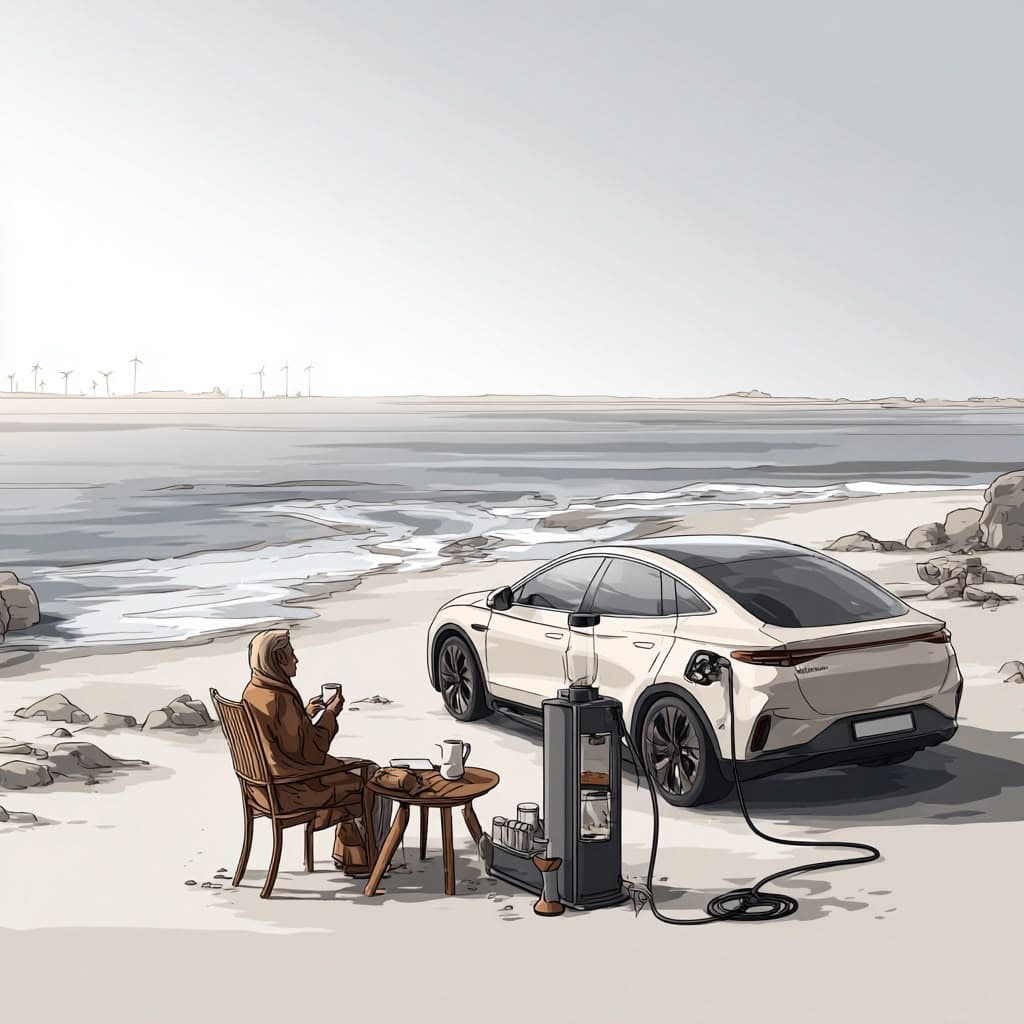
Vehicle-to-Load (V2L) allows your EV to act as a mobile power source, providing electricity for camping equipment, tools, or emergency backup power.
The number of EVs with V2L in New Zealand continues to grow.
167 V2L capable EV variants.
← Swipe to scroll horizontally →
Vehicle | Usable Battery (kWh) | V2L Capacity | Interior | External |
|---|---|---|---|---|
2026→ | 42.3 kWh | 3.3 kW | ||
2026→ | 108.7 kWh | 3.7 kW | ||
2025→ | 30 kWh | 3.3 kW | ||
2025→ | 43.2 kWh | 3.3 kW | ||
2025→ | 51.1 kWh | 3.3 kW | ||
2025→ | 51.1 kWh | 3.3 kW | ||
2025-2026 | 50 kWh | 2.2 kW | ||
2026→ | 60.5 kWh | 3.3 kW | ||
| 74.9 kWh | 3.3 kW | |||
2026→ | 74.9 kWh | 3.3 kW | ||
2022-2024 | 60.5 kWh | 2.2 kW | ||
2022-2023 | 50 kWh | 2.2 kW | ||
2025→ | 60.5 kWh | 2.2 kW | ||
2023-2026 | 44.9 kWh | 3.3 kW | ||
2023-2026 | 60.5 kWh | 3.3 kW | ||
2023→ | 61.4 kWh | 3 kW | ||
2023→ | 82.6 kWh | 3 kW | ||
2023→ | 82.6 kWh | 3 kW | ||
| 82.5 kWh | 3.3 kW | |||
2025→ | 82.5 kWh | 3.3 kW | ||
2026→ | 103 kWh | 6.6 kW | ||
2026→ | 103 kWh | 6.6 kW | ||
2026→ | 70.3 kWh | 2.2 kW | ||
2026→ | 70.3 kWh | 3.3 kW | ||
2025 | 43.9 kWh | 3.6 kW | ||
2026→ | 43.9 kWh | 3.6 kW | ||
2026→ | 51.9 kWh | 3.3 kW | ||
2025→ | 83 kWh | 3.3 kW | ||
2025→ | 83 kWh | 3.3 kW | ||
2025→ | 83 kWh | 3.3 kW | ||
2026→ | 67 kWh | 3.3 kW | ||
2023→ | 67 kWh | 2.3 kW | ||
2026→ | 60 kWh | 3.3 kW | ||
2026→ | 60 kWh | 3.3 kW | ||
2026→ | 75.3 kWh | 3.3 kW | ||
2026→ | 75.3 kWh | 3.3 kW | ||
2026→ | 35.4 kWh | 3.3 kW | ||
2026→ | 47.1 kWh | 3.3 kW | ||
2025→ | 60.2 kWh | 3.3 kW | ||
2025-2026 | 60.2 kWh | 3.3 kW | ||
| 68.4 kWh | 3.3 kW | |||
2025→ | 73 kWh | 6 kW | ||
2026→ | 58.3 kWh | 6 kW | ||
2026→ | 58.3 kWh | 6 kW | ||
2025-2026 | 57.7 kWh | 6 kW | ||
2025-2026 | 57.7 kWh | 6 kW | ||
2025→ | 60 kWh | 3.6 kW | ||
2023-2024 | 74 kWh | 3.6 kW | ||
2023-2024 | 74 kWh | 3.6 kW | ||
2025→ | 80 kWh | 3.6 kW |
Interior: A standard 3-pin socket is available inside the vehicle cabin.
External: An adaptor is required to connect to the exterior CCS port.
Vehicles with external V2L require an adapter that fits into the charging port. The adaptor can be purchased from the vehicle dealership, or via a third party such as Smart EV Chargers in Christchurch.
What about V2H or V2G?
Vehicle-to-Home or Vehicle-to-Grid means plugging your EV into your home or the grid to supply power (via a bidirectional charger). Whereas Vehicle-to-Load (V2L) allows the vehicle to supply power to external devices - via a 3-pin socket.
While there have been many succesful trials of V2G, right now, manufacturers have not yet clarified how this usage would impact vehicle / traction battery warranty. It also requires a specialised bi-directional charger to be installed (high price).
However, there is a strong desire to have workable V2H/V2G solutions operating in Australia and New Zealand - it's only a matter of time.
Do Plug-in Hybrids (PHEVs) support V2L?
Some PHEVs support V2L, but note that batteries are considerably smaller than those in full EVs (typically between 12-25 kWh).
- Mitsubishi Eclipse Cross PHEV (MY23 onwards) - 1,500 W max output (interior)
- Mitsubishi Outlander PHEV (MY23 onwards) - 1,500 W max output (interior)
- BYD Sealion 6, Chery Tiggo PHEV, MG HS Super Hybrid, Jaecoo J7, Haval H6 PHEV - (exterior)
What is the maximum load?
The number listed is the peak power output – supplied by the manufacturer. Almost all V2Ls are good for a continuous draw of around ten amps.
What can I plug in?
Anything. However, some appliances with high loads should only be used briefly (in the same way you wouldn’t overload a multi-plug adaptor).