The most efficient EVs in New Zealand
Which vehicle travels the furthest with the least amount of energy.

An efficient electric vehicle is the one that uses the lowest amount of electricity to travel the furthest distance.
This is determined under testing conditions (WLTP) that takes measures recharged electricity. This is called WLTP consumption and allows drivers to compare running costs.
What you see on the dashboard while driving is efficiency (measured by energy drawn from the battery).
This list is updated dynamically as new models are released.
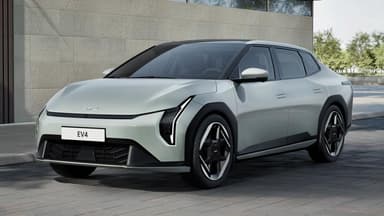
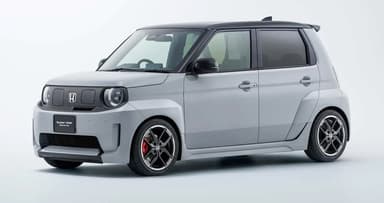
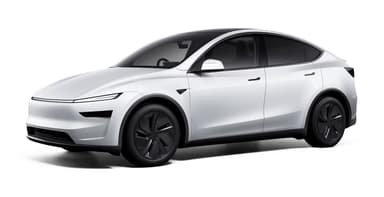
How does this affect running cost?
If your EV uses 189 Wh/km it means it will cost you 18.9 kWh of electricity (from your home switchboard) to travel 100 kilometres.
What you see on the dashboard (efficiency) shows the amount of energy used from the battery. Most EVs have a temperature sweet spot (20-25°) where energy use is lowest.
However, WLTP consumption allows you to estimate true running cost.
When an EV is charged, not all electricity goes directly into the battery - there are losses; thermal loss, the AC-to-DC conversion, and some EVs may use mains electricity to precondition the battery.
Top 50 most efficient EVs
Adjust your electricity price to see running cost for each vehicle.
← Swipe to scroll horizontally →
Model | Consumption (kWh/100 km) | Range (km) | Running Cost ($/100 km) |
|---|---|---|---|
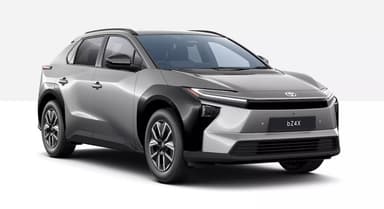
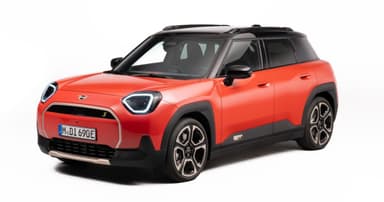
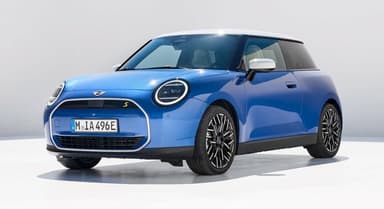
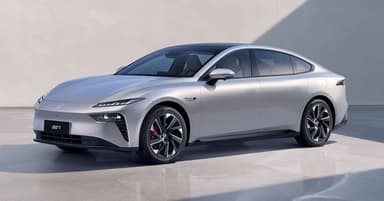
| 12.2 | 572 km | $3.05 | |
| 12.5 | 750 km | $3.13 | |
| 13.8 | 520 km | $3.45 | |
| 13.8 | 591 km | $3.45 | |
| 13.8 | 406 km | $3.45 | |
| 14.1 | 402 km | $3.52 | |
| 14.3 | 520 km | $3.58 | |
| 14.4 | 633 km | $3.60 | |
| 14.8 | 206 km | $3.70 | |
| 14.9 | 466 km | $3.73 | |
| 14.9 | 612 km | $3.73 | |
| 14.9 | 611 km | $3.73 | |
| 14.9 | 436 km | $3.73 | |
| 14.9 | 605 km | $3.73 | |
| 15.1 | 681 km | $3.77 | |
| 15.1 | 805 km | $3.77 | |
| 15.1 | 426 km | $3.77 | |
| 15.3 | 622 km | $3.83 | |
| 15.3 | 460 km | $3.83 | |
| 15.3 | 445 km | $3.83 | |
| 15.3 | 405 km | $3.83 | |
| 15.4 | 310 km | $3.85 | |
| 15.4 | 317 km | $3.85 | |
| 15.4 | 533 km | $3.85 | |
| 15.5 | 400 km | $3.88 | |
| 15.5 | 400 km | $3.88 | |
| 15.5 | 345 km | $3.88 | |
| 15.5 | 430 km | $3.88 | |
| 15.5 | 292 km | $3.88 | |
| 15.5 | 435 km | $3.88 | |
| 15.5 | 435 km | $3.88 | |
| 15.5 | 430 km | $3.88 | |
| 15.5 | 220 km | $3.88 | |
| 15.6 | 420 km | $3.90 | |
| 15.6 | 440 km | $3.90 | |
| 15.7 | 382 km | $3.92 | |
| 15.8 | 430 km | $3.95 | |
| 15.8 | 582 km | $3.95 | |
| 15.8 | 400 km | $3.95 | |
| 15.9 | 582 km | $3.98 | |
| 15.9 | 480 km | $3.98 | |
| 15.9 | 252 km | $3.98 | |
| 16.0 | 310 km | $4.00 | |
| 16.0 | 520 km | $4.00 | |
| 16.0 | 420 km | $4.00 | |
| 16.0 | 517 km | $4.00 | |
| 16.0 | 545 km | $4.00 | |
| 16.0 | 570 km | $4.00 | |
| 16.1 | 560 km | $4.03 | |
| 16.2 | 563 km | $4.05 |
Two different units
Dashboard efficiency is given in two different units:
- kWh per 100 km (how many kilowatt-hours are consumed per 100 kilometres).
- km per kWh (how many kilometres the car travels per kilowatt-hour).
It's just a personal preference, and in many cars you can change the setting.
What makes an EV efficient?
- low aerodynamic coefficient (the smaller the frontal area the better).
- low mass.
- powertrain efficiencies.
- low rolling resistance.
So, generally, sedans, and lighter hatchbacks will be the most efficient EVs.
How is your driving?
Here's a quick chart (very generalised) to know how your car / current journey is looking| kWh / 100 km | km / kWh | Efficiency |
| 10 | 10.0 | Incredible |
| 10.5 | 9.5 | Incredible |
| 11 | 9.1 | Incredible |
| 11.5 | 8.7 | Excellent |
| 12 | 8.3 | Excellent |
| 12.5 | 8.0 | Excellent |
| 13 | 7.7 | Good |
| 13.5 | 7.4 | Good |
| 14 | 7.1 | Good |
| 14.5 | 6.9 | Normal |
| 15 | 6.7 | Normal |
| 15.5 | 6.5 | Normal |
| 16 | 6.3 | Normal |
| 16.5 | 6.1 | Normal |
| 17 | 5.9 | Highway |
| 17.5 | 5.7 | Highway |
| 18 | 5.6 | Highway |
| 18.5 | 5.4 | Highway |
| 19 | 5.3 | Highway |
| 19.5 | 5.1 | Highway |
| 20 | 5.0 | Highway |